
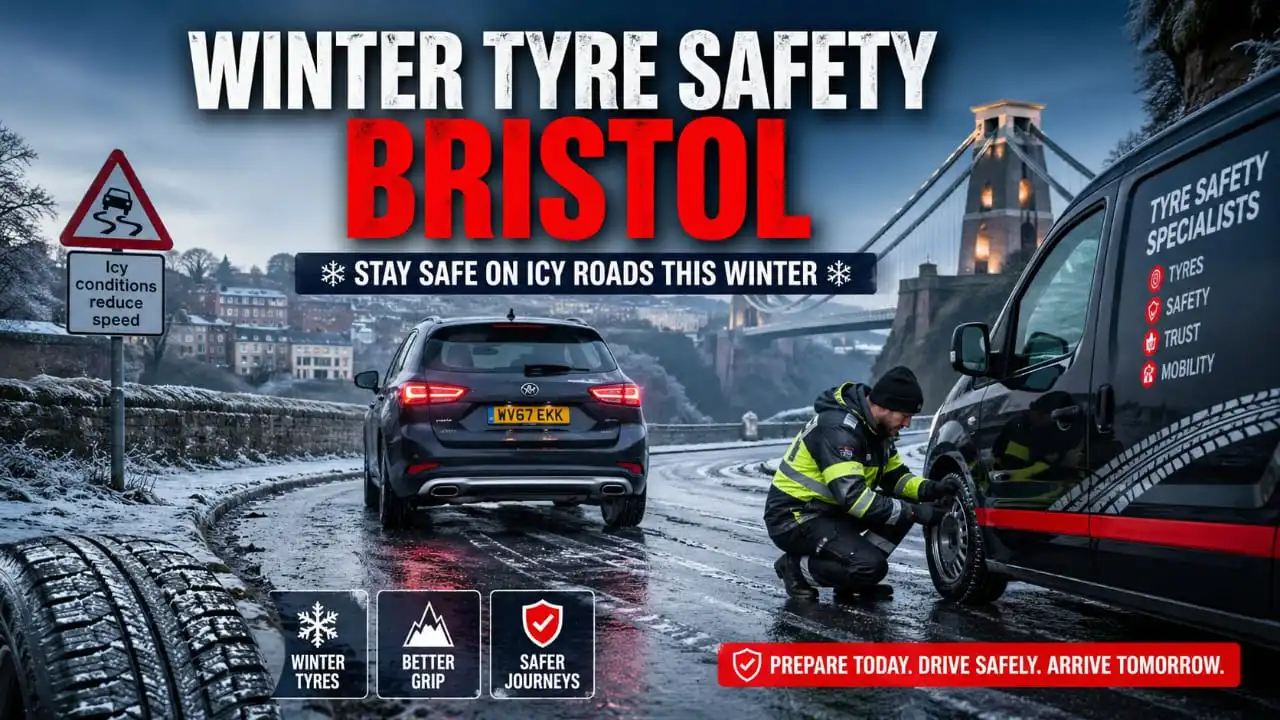
Winter Tyre Safety Bristol is something every driver in the city needs to think about before the cold months hit. Bristol roads can get icy, wet, and slippery fast and the wrong tyres can put you in real danger. Black ice forms overnight, braking distances increase, and road grip gets much worse in freezing temperatures.
This blog will help you through everything you need to know. From when to change your tyres to how to check tyre tread you will find clear, simple advice here. We will also cover UK tyre laws, safe driving tips, and how to handle a skid on ice.
Whether you are a new driver or have been driving for years, this guide will help you stay safe this winter. And if you need help right away, Fast Grip Mobile Tyres is here to help Bristol drivers 24/7.
What is Winter Tyre Safety Bristol and Why It Matters?
Winter tyre safety is about making sure your car’s tyres can handle cold, wet, and icy roads safely. In Bristol, temperatures can drop below 7°C between November and March. At that point, standard summer tyres become less effective.
Here’s why it matters. Normal tyres get stiff in cold weather. That means less traction and less friction between your tyre and the road. Your braking distance gets longer. And on icy roads, that extra distance can be the difference between a near miss and a crash.
Think about a frosty morning in Bristol. You leave home at 7am, roads look dry, but there’s a hidden patch of black ice near a junction. Without proper tyres, your car won’t stop in time. That’s a real scenario that happens every winter in the UK.
Getting your tyres checked before winter arrives is not just smart, it could save your life. Learn more about signs you need tyre replacement before it’s too late.
How Winter Tyres Improve Safety on Icy Roads
Winter tyres Bristol drivers are using are specially made for cold conditions. They use a softer rubber compound that stays flexible even in freezing temperatures. That flexibility is what gives them better grip.
Here is how they make a real difference:
- Better grip: Winter tyres have deeper grooves and tiny cuts called sipes. These bite into snow and ice for more control.
- Shorter braking distance: Studies show winter tyres can reduce braking distance on ice by up to 11 metres compared to summer tyres at 50mph.
- More vehicle control: You steer and corner better because the tyre stays in contact with the road surface.
Now let’s compare winter tyres and all-season tyres side by side:
Feature | Winter Tyres | All-Season Tyres |
Grip in Snow/Ice | Excellent | Moderate |
Performance Below 7°C | Designed for it | Reduced |
Braking Distance on Ice | Much shorter | Longer |
Summer Performance | Not ideal | Good |
UK Recommendation | Highly recommended | Acceptable alternative |
Cost | Higher initial cost | Mid-range |
All-season tyres are a decent option if you don’t want to switch tyres twice a year. But for serious winter conditions, dedicated winter tyres give you much better protection on icy roads.
When to Change to Winter Tyres in Bristol
The simple rule for when to change tyres UK is this: switch to winter tyres when the temperature regularly drops below 7 degrees Celsius. In Bristol, this usually happens from late October or November through to March or April.
Here’s a simple seasonal guide:
- October/November: Start thinking about winter tyres. Check your current tyre condition.
- November to March: This is the main winter period. Winter tyres should be fitted.
- March/April: When temperatures consistently rise above 7°C, switch back to summer tyres.
Don’t wait until the first frost to act. Book your tyre replacement early so you are ready before conditions get dangerous.
UK Tyre Laws You Must Know in Winter
Driving with unsafe tyres in the UK is not just dangerous it’s illegal. Here’s what the law says:
- Legal tread depth: The minimum legal tyre tread depth in the UK is 1.6mm across the central three-quarters of the tyre. But for winter driving, safety experts recommend at least 3mm for proper grip.
- Fines and penalties: If caught with illegal tyres, you can face a fine of up to £2,500 and 3 penalty points per tyre. That’s up to £10,000 and 12 points for a full set.
- MOT failure: Worn tyres will cause an MOT failure. Always check before your test.
The DVSA (Driver and Vehicle Standards Agency) sets these rules to keep roads safe. Highways England also works to maintain road safety standards across the UK. Following these rules protects you and everyone else on the road.
You can also read how often you should legally replace tyres in the UK to stay compliant and safe.
How to Check Tyre Condition for Winter Safety (Step-by-Step
Checking your tyres takes less than 10 minutes and could save your life. Here is exactly how to do it:
Step 1: Check Tyre Tread Depth
Use a 20p coin. Place it in the tyre groove. If you can see the outer band of the coin, your tread is below the legal limit. Replace those tyres immediately. Aim for at least 3mm in winter conditions.
Step 2: Inspect Tyre Condition
Look at the sidewalls and surface of the tyre. Check for cracks, bulges, or cuts. Any visible damage means the tyre is not safe to drive on, especially in cold weather.
Step 3: Check Tyre Pressure in Winter
Tyre pressure in winter is very important. Cold air causes tyre pressure to drop roughly 1 PSI for every 10°F drop in temperature. Check your car handbook for the correct pressure. Use a pressure gauge or visit a petrol station. You can also read about what to do if your tyre pressure warning light comes on while driving.
Step 4: Look for Uneven Wear
Uneven wear can mean your wheels are misaligned or your suspension has a problem. If one side of your tyre is more worn than the other, get it checked by a professional.
Step 5: Replace Worn Tyres Immediately
Don’t delay. Worn tyres in winter weather is a serious safety risk. If you are unsure, book a mobile tyre fitting in Bristol and get your tyres checked at home or at the roadside.
Need Tyres Checked Now? Book your mobile tyre fitting service in Bristol, we come to you, fast.
Winter Driving Safety Tips for Bristol Drivers
Good tyres are just the start. How you drive in winter makes a big difference too. Follow these simple tips:
- Slow down: Drive at a lower speed than usual. Icy roads need more stopping distance.
- Increase your following distance: Leave at least three times the normal gap between you and the car in front.
- Avoid sudden braking: Brake gently and early. Slamming the brakes on ice can cause skidding.
- Avoid sudden turns: Steer smoothly and slowly. Sharp movements reduce tyre grip.
- Stay alert for black ice: Black ice is invisible. Watch for shiny patches on the road surface. It’s most common in the early morning and in shaded areas.
- Use your lights: Keep headlights on in poor visibility conditions. This helps other drivers see you.
- Plan your route: Avoid roads that are more likely to be icy, like country lanes or shaded sections.
If you ever get a flat tyre in these conditions, learn about what to do if your tyre bursts while driving to stay safe.
What to Do If Your Car Skids on Ice
Skidding is scary. But if you know what to do, you can regain control quickly. Follow these steps:
- Stay calm. Panicking makes things worse. Take a breath and focus.
- Ease off the accelerator. Don’t brake hard. Gently lift your foot off the gas.
- Steer gently in the direction of the skid. If the back of the car swings right, steer right. This helps you regain control.
- Avoid hard braking. If you have ABS brakes, press the brake firmly and hold. If not, pump the brakes gently.
- Look where you want to go. Your hands naturally follow your eyes. Look at the road ahead, not at the obstacle.
Good skid prevention starts with the right tyres and the right driving habits. Proper winter tyres give you far better vehicle control on slippery surfaces.
Are Winter Tyres Necessary in Bristol Weather?
Short answer: Yes, they are recommended.
Bristol doesn’t get heavy snowfall like Scotland, but it does get icy roads, freezing rain, and temperatures below 7°C regularly during winter. At those temperatures, your standard summer tyres lose their effectiveness.
Here is the honest take:
- If you drive regularly in winter, winter tyres are worth the investment.
- If you only drive occasionally and can avoid the worst conditions, all-season tyres may be enough.
- If you do school runs, commute daily, or drive early mornings, winter tyres give you real peace of mind.
Not sure which is right for you? Read our comparison of mobile tyre fitting vs garage in Bristol to see what works best for your situation.
Winter Tyre Safety Checklist (Quick Guide)
Use this checklist every autumn before winter hits:
- Check tyre tread depth (minimum 3mm for winter)
- Check tyre pressure (adjust for cold temperatures)
- Inspect tyres for cuts, bulges, or cracks
- Switch to winter tyres if temperature drops below 7°C
- Check spare tyre condition and pressure
- Keep an emergency kit in the car (torch, blanket, ice scraper)
- Book a tyre inspection if unsure about tyre condition
- Check wheel alignment and tyre rotation
You can also learn about tyre rotation to keep your tyres wearing evenly through the winter months.
Common Winter Tyre Mistakes to Avoid
Even experienced drivers make these mistakes. Here’s what to watch out for:
- Driving with worn tyres: Tyres with low tread can’t grip icy roads. Check tread before winter starts.
- Ignoring tyre pressure: Under-inflated tyres reduce handling and increase the risk of a blowout. Check pressure monthly in winter.
- Late tyre replacement: Don’t wait until you get a puncture. If tyres are worn, replace them before winter arrives.
- Overconfidence on icy roads: Even with winter tyres, you need to drive carefully. Tyres help, but they’re not magic.
- Using winter tyres all year: Winter tyres wear faster in warm weather. Switch back to summer tyres when temperatures rise above 7°C.
If you have a nail in your tyre and are unsure what to do, read our guide on nail in tyre: repair or replace for clear advice.
Why Choose Fast Grip Mobile Tyres in Bristol?
When it comes to winter tyre safety in Bristol, you need a service that is fast, reliable, and available when you need it most. That’s where Fast Grip Mobile Tyres comes in.
- 24/7 emergency service: We are available around the clock, even on weekends and bank holidays.
- Fast response time: We come to you at home, at work, or at the roadside.
- Professional team: Fully trained tyre technicians with the right tools for every job.
- Full range of services: From tyre fitting and replacement to puncture repair and tyre rotation.
We cover all areas of Bristol, so no matter where you are, help is on the way. Check out our full range of tyre services and see how we can help.
Not sure if your tyres are winter-ready? Visit Fast Grip Mobile Tyres or call us now. We’ll handle it fast.
Conclusion
Winter driving in Bristol can be unpredictable. Icy roads, freezing temperatures, and black ice are all real risks. But with the right tyres and the right driving habits, you can stay safe.
Here is a quick summary of what we covered:
- Check tyre tread depth aim for at least 3mm in winter
- Switch to winter tyres when temperatures drop below 7°C
- Keep tyre pressure correct cold air reduces pressure
- Follow UK tyre laws minimum 1.6mm tread, £2,500 fine if caught
- Drive slower, brake gently, and stay alert for black ice
- Know what to do if your car skids
Fast Grip Mobile Tyres provides fast and reliable mobile tyre services in Bristol to keep you safe on icy roads. Whether you need a winter tyre check, a quick replacement, or emergency tyre repair, we are just one call away.
Don’t wait for winter to catch you out. Book your mobile tyre fitting in Bristol today and drive with confidence all winter long.
Frequently Asked Questions
1. Do You Really Need Winter Tyres in Bristol?
Yes, it is strongly recommended. Bristol regularly sees temperatures below 7°C in winter. At that point, summer tyres lose grip and your braking distance increases significantly. Winter tyres give you much better safety and control.
2. What Temperature Is Too Cold for Normal Tyres?
Normal summer tyres become less effective below 7°C. The rubber hardens and reduces road grip. This is when winter tyres start to outperform them.
3. Are Winter Tyres Worth It in the UK?
Yes. Even in areas with mild winters like Bristol, winter tyres improve safety on icy, wet, and cold roads. They can reduce braking distance by up to 11 metres.
4. How Long Do Winter Tyres Last?
Winter tyres typically last between 4 and 6 seasons if you only use them in winter. Using them in warm weather wears them out faster. Always switch back to summer tyres when temperatures rise above 7°C.
5. Can Winter Tyres Be Used All Year Round?
Technically yes, but it is not recommended. Winter tyres wear out much faster in warm conditions and do not perform as well as summer tyres in dry, hot weather. Use them only in cold conditions for best results.
6. What Is the Difference Between Winter and Summer Tyres?
Winter tyres use softer rubber and deeper treads with tiny cuts (sipes) for better grip in cold, wet, and icy conditions. Summer tyres use harder rubber designed for warm temperatures and dry roads. All-season tyres sit in between.
7. How to Tell If Tyres Are Worn Out?
Use the 20p coin test. If you can see the outer band when placed in the tread groove, your tyres are below the legal limit. Also look for cracks, bulges, or uneven wear.
8. Is It Illegal to Drive with Worn Tyres in the UK?
Yes. The legal minimum tread depth is 1.6mm. Driving with less can result in a fine of up to £2,500 and 3 penalty points per tyre. The DVSA enforces this strictly.
9. How Much Tread Depth Is Safe in Winter?
While the legal minimum is 1.6mm, safety experts and tyre manufacturers recommend a minimum of 3mm for winter driving. Below 3mm, wet and icy road performance drops sharply.
10. Do Winter Tyres Reduce Braking Distance?
Yes. Tests show winter tyres can stop up to 11 metres shorter than summer tyres at 50mph on ice. That is more than enough distance to help avoid a serious accident.
11. What Tyre Pressure Is Best in Winter?
Always follow your car manufacturer’s recommended tyre pressure. Cold temperatures can drop pressure by 1 PSI for every 10°F. Check pressure monthly and before long journeys in winter.
12. Can I Use All-Season Tyres Instead of Winter Tyres?
Yes, all-season tyres are a good compromise if you do not want to change tyres twice a year. They perform reasonably well in light snow and cold weather. But for severe winter conditions, dedicated winter tyres are safer.
13. How Do I Drive Safely on Black Ice?
Stay calm, ease off the accelerator gently, do not brake hard, steer smoothly in the direction you want to go, and look ahead. Slowing down and staying alert is your best defence against black ice.
14. When Should I Replace My Tyres in Winter?
Replace tyres when tread drops below 3mm for winter conditions, when you see visible damage, or when the tyre is more than five years old. Do not wait for a failure.
15. How Often Should I Check My Tyres in Cold Weather?
Check tyre pressure and condition at least once a month in winter, and before every long journey. If your tyre pressure warning light comes on, address it right away. Quick checks can prevent serious problems.