
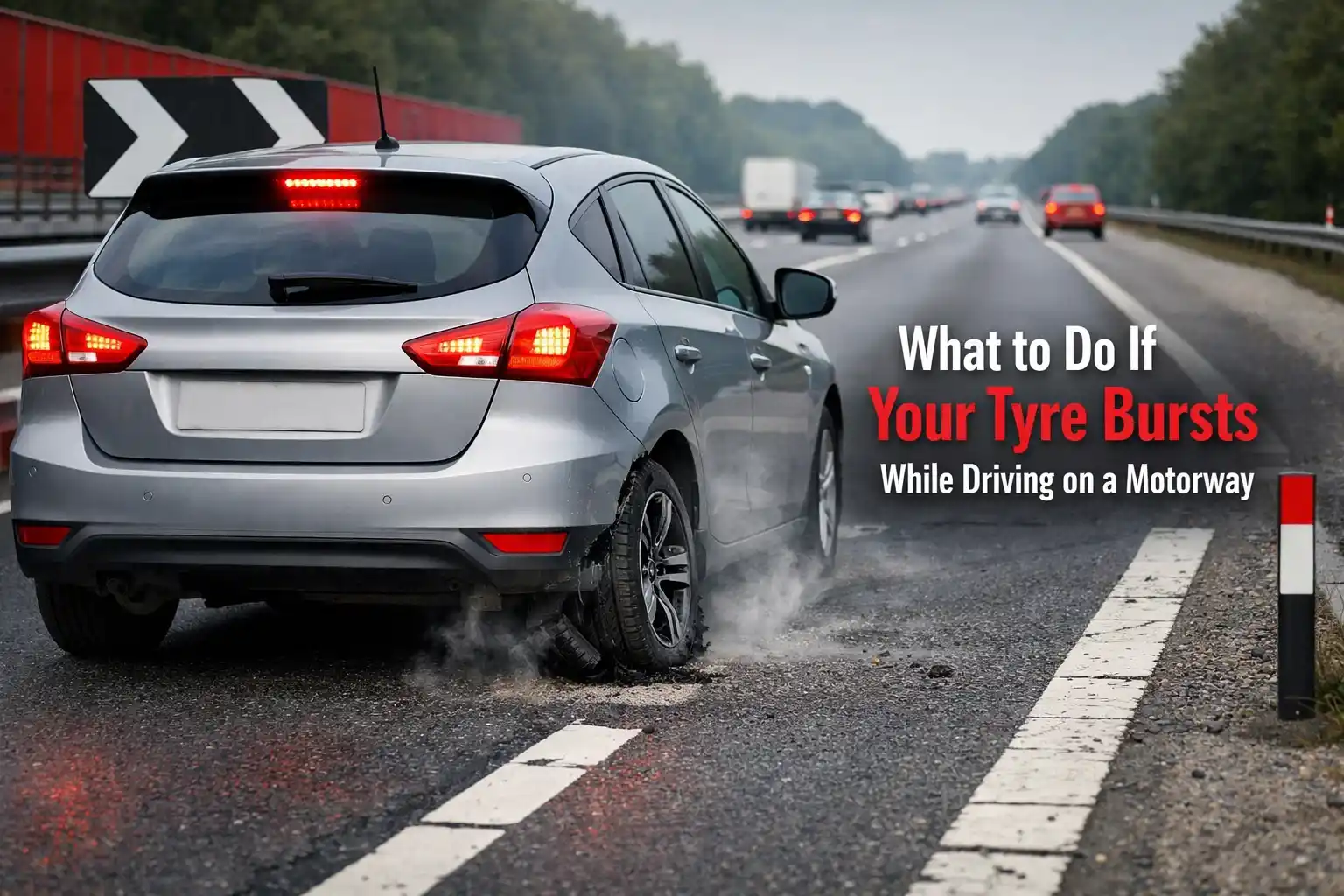
Imagine you’re cruising down the motorway at 70 mph, and suddenly BANG! Your car starts shaking, pulling to one side, and you hear a loud flapping noise. This is a tyre burst, and it’s one of the scariest moments any driver can face.
Every year, thousands of drivers experience sudden tyre failure on motorways, and many panic, making dangerous mistakes like slamming on the brakes or jerking the steering wheel. In 2023, the UK’s Department for Transport reported that tyre-related incidents contributed to over 4,000 road accidents. But here’s the good news: knowing exactly what to do can save your life and prevent a serious accident.
In this blog post, we will cover everything you need to know about handling a tyre blowout, from understanding why tyres burst to step-by-step emergency actions and preventive measures.
Why Tyres Burst While Driving
Understanding the causes of a tyre burst helps you prevent one before it happens. Unlike a slow tyre puncture, which gives you warning signs, a burst happens suddenly and violently. Here are the main culprits:
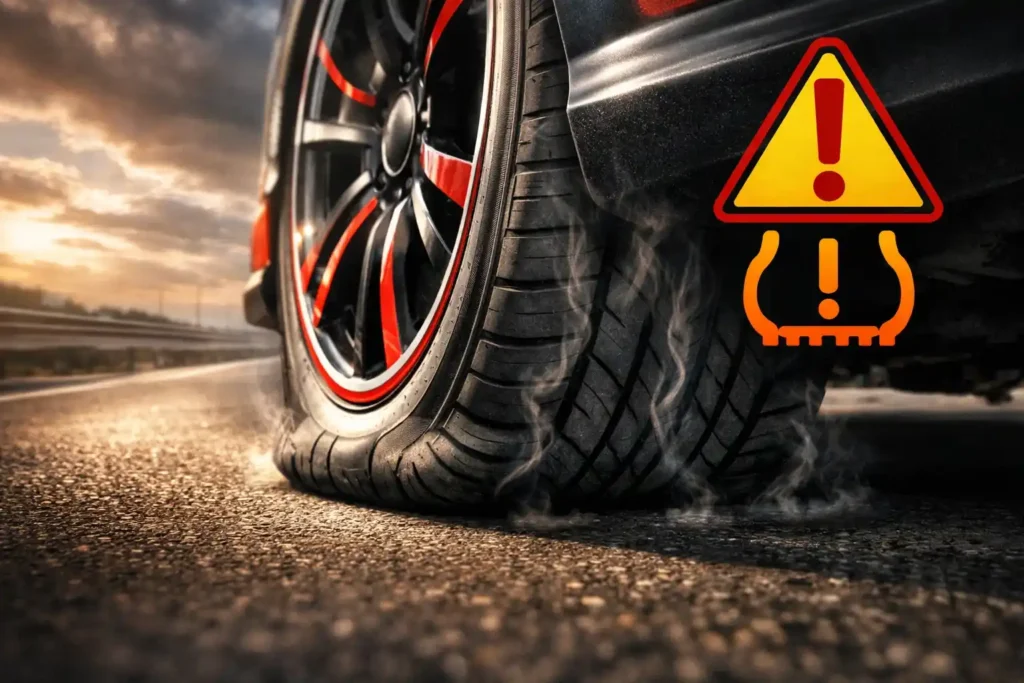
Low Tyre Pressure
When your tyres are underinflated, the sidewalls flex more than they should. This creates excessive heat, weakening the tyre structure until it explodes. According to the Royal Society for the Prevention of Accidents (RoSPA), driving on underinflated tyres increases the risk of blowouts by 300%.
Overloaded Vehicle
Every tyre has a maximum load capacity. When you exceed it, such as by packing too many people or heavy luggage, the extra weight puts enormous stress on the tyres, particularly at high speeds.
Worn Tyres
Tyres with tread depth below the UK legal limit of 1.6mm are ticking time bombs. Worn treads can’t grip the road properly, and the thin rubber is more likely to burst from road hazards or heat.
Road Hazards
Potholes, sharp debris, curbs, and broken glass can damage the tyre sidewall or tread. Sometimes the damage isn’t visible immediately, but it weakens the tyre’s integrity.
Extreme Heat
During hot summer months, the air inside your tyres expands. Combined with friction from high-speed motorway driving, this can cause the tyre to overheat and burst.
Cause | Risk Level | Prevention |
Low pressure | High | Check pressure monthly |
Overloading | Medium-High | Follow the vehicle’s load capacity |
Worn tyres | Very High | Replace at 3mm tread depth |
Road hazards | Medium | Avoid debris, drive carefully |
Extreme heat | Medium | Check the pressure in the summer |
Warning Signs of an Imminent Tyre Burst
Your tyres often give you warning signs before they burst. Learning to recognize these tyre damage signs can help you take action before disaster strikes:
- Unusual Vibrations – If your steering wheel or seat vibrates more than normal, it could indicate internal tyre damage or imbalance.
- Thumping or Flapping Noises – These sounds often mean the tyre tread is separating or the sidewall is damaged.
- Visible Bulges or Blisters – These bumps on the tyre surface indicate the internal structure is failing. A burst is imminent.
- Cracks in the Sidewall – Deep cracks mean the rubber is deteriorating from age or UV damage.
- Exposed Steel Wires – If you can see the metal cords inside the tyre, stop driving immediately. The tyre is about to fail.
- Low Pressure Warning Light – Modern cars have tyre pressure monitoring systems. Never ignore this warning.
Real-Life Example: Sarah, a commuter from Bristol, noticed a small bulge on her rear tyre one morning. Instead of ignoring it, she called a mobile tyre fitting service and had it replaced before her motorway journey. Two days later, her mechanic showed her the tyre it had developed a massive internal tear that would have burst at high speed.
Step-by-Step Actions During a Tyre Burst
When a tyre bursts, you have about 2-3 seconds to react correctly. Here’s exactly what to do:
Step 1: Stay Calm and Hold the Steering Wheel Firmly
This is the most important step. When a tyre bursts, your car will immediately pull toward the side of the damaged tyre. Your instinct might be to panic or overreact, but that’s the worst thing you can do.
- Grip the steering wheel firmly with both hands at the 9 and 3 o’clock positions.
- Resist the pull by applying gentle, steady pressure in the opposite direction.
- Don’t jerk the wheel; sudden steering movements will make you lose control completely.
- Keep your eyes on the road ahead, not on the tyre or the roadside.
Think of it like balancing on a bike; smooth, controlled movements keep you stable. Panic reactions cause crashes.
Step 2: Avoid Sudden Braking
Here’s where many drivers make a fatal mistake: they slam on the brakes. When a tyre bursts, your car is already unbalanced. If you brake hard:
- The car will fishtail (swing side to side wildly)
- You could spin out into other lanes
- You might flip over if you’re in an SUV or van
What to do instead:
- Take your foot off the accelerator and let the car slow down naturally.
- Use gentle, gradual braking only after the car has slowed to about 30-40 mph.
- If you have a manual transmission, downshift gently to help slow down.
The physics here is simple: a burst tyre creates uneven friction. Hard braking amplifies that imbalance, making your vehicle uncontrollable.
Step 3: Turn On Hazard Lights
As soon as you have control of the steering, activate your hazard lights. This is critical on motorways where vehicles travel at high speeds.
- Your hazard lights warn other drivers that you’re in an emergency.
- They give vehicles behind you time to slow down and change lanes.
- In heavy traffic, they prevent rear-end collisions.
On UK motorways, where the average speed is 70 mph, other drivers need every second of warning they can get. According to Highways England, proper use of hazard lights reduces secondary accidents by up to 40%.
Step 4: Pull Over Safely
Once you’ve slowed down and signaled to other drivers, it’s time to get off the road.
Motorway-specific guidance:
- Aim for the hard shoulder on the left side of the motorway.
- Don’t stop in a live traffic lane unless you absolutely have no choice.
- Don’t cross multiple lanes; suddenly move over gradually and safely.
- If you can’t reach the hard shoulder, look for an emergency refuge area (marked with blue signs).
Once stopped:
- Park as far left as possible, away from traffic.
- Turn your wheels toward the verge/barrier.
- Exit the vehicle from the passenger side (away from traffic).
- Stand behind the barrier, never on the hard shoulder.
- Call emergency services if needed.
Important UK Law: Stopping on the hard shoulder is only permitted for emergencies. You must leave the motorway at the next exit if it’s safe to continue driving slowly. Understanding the signs you need tyre replacement can help you avoid roadside emergencies altogether.
Step 5: Call Emergency Mobile Tyre Fitting
Now that you’re safely off the road, you need to decide your next move. Here’s why calling a professional mobile tyre fitting service is your best option:
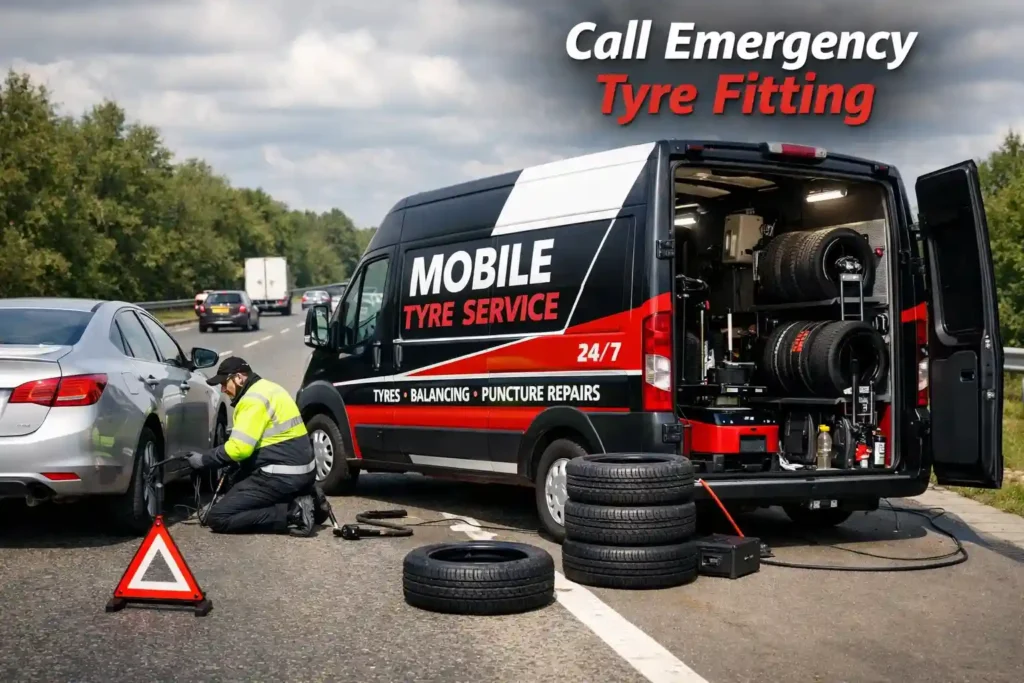
Safety First – Changing a tyre on a motorway hard shoulder is extremely dangerous. You’re inches away from vehicles traveling at 70 mph. In 2022, over 40 people were killed on UK hard shoulders.
Fast Response – Professional services like Fast Grip Mobile Tyres offer 24/7 roadside tyre replacement. They come to you, equipped with the right tools and safety equipment.
Quality Guarantee – Mobile fitters bring brand-new tyres and fit them properly, ensuring your safety. They also check the other tyres for potential issues.
Time-Saving – No need to struggle with a jack or spare tyre in dangerous conditions. Professionals can have you back on the road in 30-45 minutes.
Cost-Effective – Many breakdown policies cover mobile tyre fitting, and even without coverage, the peace of mind is worth the cost.
To learn more about how this service works, check out this helpful guide on how mobile tyre fitting works.
Step 6: What to Do if You Must Change the Tyre Yourself
If you’re not on a motorway and it’s safe to change the tyre yourself, follow these critical safety steps:
Essential Safety Equipment:
- Hi-vis jacket – Wear it before exiting the vehicle
- Warning triangle – Place it 45 meters behind your car
- Gloves – Protect your hands from sharp edges and steel wires
Changing the Tyre:
- Ensure the car is on flat, solid ground.
- Apply the parking brake and put the car in “Park” (or first gear for manual).
- Place wheel chocks or large stones behind the opposite tyres.
- Loosen the lug nuts slightly before jacking up the car.
- Use the jack at the correct jacking point (check your owner’s manual).
- Remove the damaged tyre and fit the spare.
- Hand-tighten the lug nuts first, then use the wrench in a star pattern.
- Lower the car and tighten the nuts fully.
Critical Warning: If you see exposed steel wires on the burst tyre, be extremely careful. These sharp metal cords can cause serious cuts. Wear thick gloves or wait for professional help.
Important Note: Your spare tyre (especially a “space-saver” or temporary spare) is not designed for motorway speeds. Drive slowly (maximum 50 mph) and replace it with a full-size tyre as soon as possible. For safe and proper repairs, visit a tyre repair specialist.
Preventive Measures to Avoid Tyre Bursts
Prevention is always better than emergency response. Here’s how to keep your tyres in top condition and avoid sudden tyre failure on motorways:
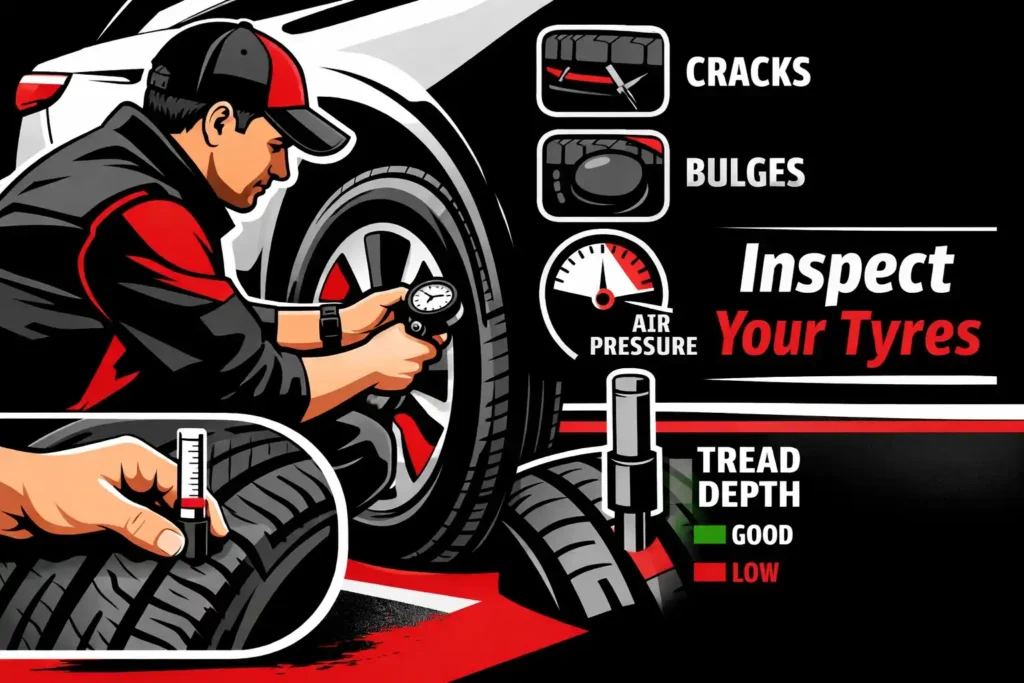
Regular Tyre Inspection
Weekly Visual Checks:
- Look for cracks, cuts, or bulges on the sidewalls
- Check for objects stuck in the tread (nails, glass, stones)
- Inspect tread depth using the 20p test (insert a 20p coin into the groove—if you can see the outer band, the tyre is too worn)
Monthly Detailed Checks:
- Measure tyre pressure with a dial gauge when tyres are cold
- Check the spare tyre condition and pressure
- Look for uneven wear patterns (indicates alignment issues)
Maintain Proper Tyre Pressure
Tyre pressure changes with temperature. In summer, heat expands the air; in winter, it contracts:
- Check pressure at least once a month
- Follow the manufacturer’s recommended PSI (found in your car’s door jamb or manual)
- Add 2-3 PSI before long motorway journeys
- Never exceed the maximum pressure listed on the tyre sidewall
Did You Know? For every 10°F drop in temperature, tyre pressure drops by about 1 PSI. That’s why low tyre pressure warnings are common in winter.
Invest in Premium Tyres
Not all tyres are created equal. Premium tyres from reputable manufacturers offer:
- Better grip in wet and dry conditions
- Stronger sidewalls that resist damage
- Longer lifespan (up to 50,000 miles vs. 30,000 for budget tyres)
- Improved fuel efficiency from lower rolling resistance
While premium tyres cost more upfront, they save money in the long run and significantly reduce your risk of a tyre blowout. Understanding when you need a new set is crucial learn more about tyre replacement services.
Schedule Professional Tyre Servicing
Every 6 months or 6,000 miles:
- Professional tyre rotation ensures even wear across all four tyres
- Wheel alignment checks prevent uneven tread wear
- Balance checks eliminate vibrations and extend tyre life
Professional services spot problems you might miss, like internal belt separation or early signs of sidewall failure. If you’re in Bristol, consider scheduling a tyre rotation service to keep your tyres in optimal condition.
Additional Tips
- Avoid potholes and curbs – They cause internal damage you can’t see
- Don’t overload your vehicle – Check your car’s maximum load capacity
- Replace tyres every 5-6 years – Even with good tread, rubber degrades over time
- Use run-flat tyres – They allow you to drive 50 miles at 50 mph after a puncture (learn more about run-flat tyre repairs)
Conclusion
A tyre burst on the motorway is terrifying, but it doesn’t have to end in disaster. Remember the three golden rules: stay calm, avoid sudden movements, and pull over safely. Your first instinct might be to panic, but keeping a firm grip on the wheel and resisting the urge to brake hard will keep you in control.
When stranded, Fast Grip Mobile Tyres provides 24/7 emergency mobile tyre fitting across Bristol and nearby areas, safely and quickly. Don’t risk changing a tyre yourself; let the experts handle it.
Your safety is too important to leave to chance. Contact us for immediate roadside assistance.
Frequently Asked Questions
1. Can I drive with a burst tyre?
No, never drive on a burst tyre. It damages your wheel rim, affects steering and braking, and puts you and others at serious risk of accidents.
2. How fast can I drive after a tyre bursts?
Don’t continue driving. Slow down immediately, pull over safely, and call for emergency tyre replacement or use your spare if it’s safe to change it.
3. What are the signs of an imminent tyre blowout?
Watch for vibrations, bulges, cracks, exposed steel wires, unusual noises, and low-pressure warnings. These indicate your tyre is about to fail.
4. How to handle a run-flat tyre in an emergency?
Run-flat tyres let you drive up to 50 miles at 50 mph maximum. Avoid motorways, drive carefully, and get to a tyre service immediately.
5. When should I call a mobile tyre fitting on the motorway?
Call immediately after safely pulling over. Never attempt to change a tyre on a motorway hard shoulder; it’s extremely dangerous with fast-moving traffic nearby.